
Introduction
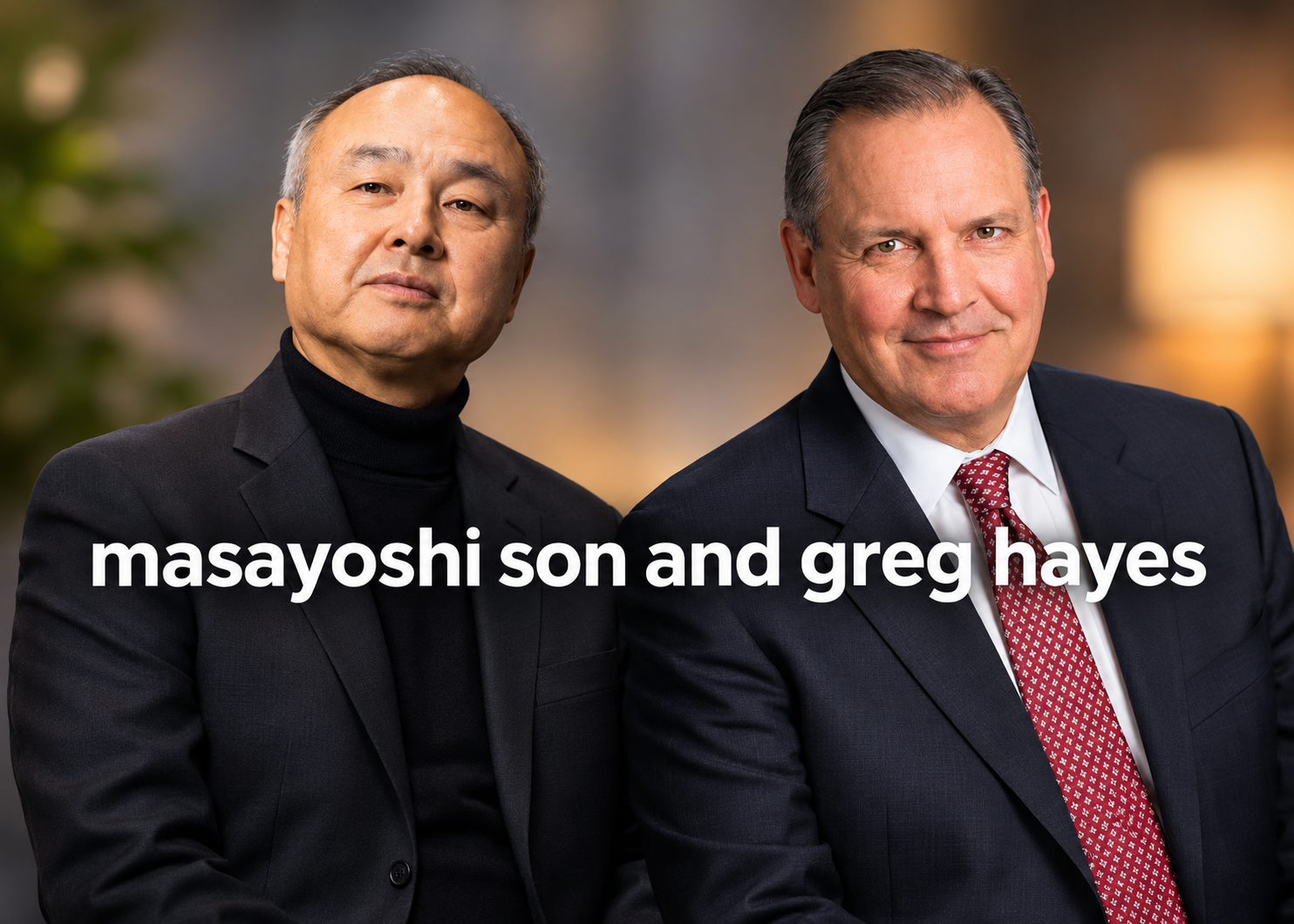
Masayoshi Son and Greg Hayes are two influential business figures who have made significant contributions to different industries. at United Technologies and RTX Corporation.
Both executives have demonstrated strategic thinking, business experience, and the ability to guide major organisations through periods of transformation. Their professional journeys show how different leadership approaches can influence technological development, corporate expansion, and long-term business growth.
Although they have worked in separate industries, their careers provide valuable insights into entrepreneurship, financial management, innovation, and corporate decision-making.
This article explores their backgrounds, professional achievements, leadership approaches, and contributions to international business.
Quick Bio of Masayoshi Son and Greg Hayes
| Detail | Masayoshi Son | Greg Hayes |
|---|---|---|
| Full name | Masayoshi Son | Gregory J. Hayes |
| Date of birth | 11 August 1957 | Not publicly confirmed |
| Age (November 2026) | 69 years | Not publicly confirmed |
| Nationality | Japanese | American |
| Education | University of California, Berkeley | Purdue University |
| Profession | Entrepreneur, investor, business executive | Business executive, corporate director |
| Known for | Founding SoftBank Group | Leading United Technologies and RTX |
| Major organisation | SoftBank Group | RTX Corporation |
| Notable position | Chairman and CEO of SoftBank Group | Former Chairman and CEO of RTX |
| Industry | Technology, telecommunications, investment | Aerospace, defence, industrial technology |
| Current professional role | Chairman and CEO of SoftBank Group | Corporate board director |
Who Is Masayoshi Son?
Masayoshi Son is a Japanese entrepreneur and investor best known as the founder of SoftBank Group. Born on 11 August 1957, he developed an early interest in business, computers, and emerging technologies.
Son studied in the United States and graduated from the University of California, Berkeley. His education and exposure to the technology industry helped shape his entrepreneurial ambitions.
In 1981, he established the business that eventually became SoftBank Group. Initially focused on software distribution, the company expanded into telecommunications, internet businesses, semiconductor technology, and international investments.
Over the following decades, Son became one of Japan’s most prominent technology entrepreneurs. His willingness to invest in emerging industries helped establish SoftBank as an important participant in the global technology market.
As of November 2026, he continues to serve as Chairman and CEO of SoftBank Group.
Masayoshi Son’s Career and Business Achievements
Masayoshi Son’s career is closely associated with bold investments and long-term technological development.
One of his most significant investment decisions involved Alibaba, the Chinese e-commerce company. SoftBank’s early investment in Alibaba became an important example of Son’s ability to recognise emerging business opportunities.
Another major achievement was SoftBank’s acquisition of Arm in 2016. Arm develops semiconductor technology used in many electronic devices, making the acquisition strategically important for SoftBank’s broader technology ambitions.
Son also established the SoftBank Vision Fund, which began investing in technology businesses in 2017. The initiative supported companies operating in areas such as artificial intelligence, digital platforms, transportation, and financial technology.
However, not every investment produced the expected results. Some investments, including WeWork, demonstrated the risks associated with rapidly growing technology businesses.
Despite these challenges, Son remains an influential figure in technology investment, with artificial intelligence becoming an increasingly important focus of his business strategy.
Who Is Greg Hayes?
Gregory J. Hayes is an American business executive recognised for his extensive leadership experience in the aerospace and defence industries.
Hayes earned a bachelor’s degree in economics from Purdue University and became a Certified Public Accountant. His financial education provided a foundation for his later responsibilities in corporate strategy, financial management, and business development.
He joined United Technologies Corporation in 1999 through its merger with Sundstrand Corporation. Over time, he held several senior management positions and developed extensive experience in overseeing large industrial businesses.
Hayes served as Chief Financial Officer of United Technologies from 2008 to 2014. He subsequently became CEO in 2014 and Chairman in 2016.
His leadership responsibilities expanded further when United Technologies’ aerospace businesses merged with Raytheon Company in 2020, forming Raytheon Technologies, later renamed RTX Corporation.
Greg Hayes’ Career and Major Achievements
Greg Hayes played a central role in restructuring United Technologies and shaping the company that became RTX.
During his leadership, United Technologies sold Sikorsky Aircraft in 2015 and acquired Rockwell Collins in 2018. These transactions formed part of a broader strategy to strengthen its aerospace operations.
In 2020, United Technologies separated its Otis elevator and Carrier building systems businesses. Its remaining aerospace operations then merged with Raytheon Company.
This merger created a major aerospace and defence organisation with businesses serving commercial aviation and government defence customers.
Hayes continued leading the combined company through significant changes in the aerospace industry.
In May 2024, he transitioned from CEO to Executive Chairman. He stepped down from that position in April 2025, when Christopher Calio became RTX Chairman.
Following his executive leadership career, Hayes continued contributing to corporate governance through board positions, including at Phillips 66 and Becton, Dickinson and Company.
Leadership Styles of Masayoshi Son and Greg Hayes
Masayoshi Son and Greg Hayes represent different approaches to corporate leadership.
Son is particularly associated with entrepreneurial vision, technological innovation, and investment in emerging industries. His strategy often involves identifying businesses with the potential to transform markets over several decades.
Hayes, by comparison, is recognised for financial discipline, corporate restructuring, and operational management. His leadership experience includes managing established industrial organisations and coordinating major corporate transactions.
Son’s business decisions frequently involve opportunities in developing technologies, while Hayes has concentrated on strengthening established aerospace businesses through strategic acquisitions and organisational changes.
Both approaches demonstrate the importance of planning, financial expertise, and adapting to changing market conditions.
Masayoshi Son and Greg Hayes: Key Differences
| Comparison | Masayoshi Son | Greg Hayes |
|---|---|---|
| Primary focus | Technology investment | Aerospace and defence |
| Career background | Entrepreneurship | Finance and corporate management |
| Leadership approach | Visionary and investment-driven | Strategic and operations-focused |
| Major achievement | Building SoftBank Group | Helping create RTX |
| Business strategy | Investing in emerging technologies | Corporate restructuring and integration |
| Professional influence | Global technology investment | Aerospace industry leadership |
Their Impact on Global Business
Masayoshi Son has helped direct substantial investment towards technology companies and emerging innovations. His activities have contributed to the development of telecommunications, digital platforms, and artificial intelligence businesses.
Greg Hayes has influenced the aerospace and defence industry through corporate restructuring, acquisitions, and the integration of major businesses.
Their careers also demonstrate that large-scale business transformation requires the ability to manage uncertainty. Major investment decisions, corporate mergers, and technological changes can create opportunities while introducing significant financial and operational risks.
Although their industries differ, both executives have influenced how major organisations plan for future growth.
Frequently Asked Questions (FAQs)
Who are Masayoshi Son and Greg Hayes?
Masayoshi Son is the Japanese founder and CEO of SoftBank Group. Greg Hayes is an American executive and former CEO and Chairman of RTX Corporation.
How old are Masayoshi Son and Greg Hayes?
Masayoshi Son is 69 years old as of November 2026. Greg Hayes’ exact birth date and age are not reliably confirmed in the official biographical information reviewed.
What is Masayoshi Son famous for?
He is famous for founding SoftBank Group, investing in Alibaba, acquiring Arm, and establishing the SoftBank Vision Fund.
What is Greg Hayes famous for?
Greg Hayes is known for leading United Technologies and playing a central role in the creation of RTX Corporation through the 2020 merger with Raytheon Company.
Do Masayoshi Son and Greg Hayes work together?
There is no publicly confirmed direct business partnership between Masayoshi Son and Greg Hayes. Their careers have primarily developed in different industries.
What can entrepreneurs learn from their careers?
Their careers highlight the value of strategic planning, financial knowledge, innovation, adaptability, and long-term business decision-making.
Final Thoughts
Masayoshi Son and Greg Hayes have established distinguished careers through their contributions to technology investment and aerospace leadership.
Son’s entrepreneurial vision helped transform SoftBank into an international investment organisation, while Hayes’ financial expertise and strategic management contributed to major changes within the aerospace industry.
Their professional experiences demonstrate that business success can emerge through different strategies. Whether investing in emerging technologies or restructuring established corporations, effective leadership requires sound judgement, clear objectives, and the ability to respond to uncertainty.
Together, their careers offer useful lessons about innovation, corporate transformation, and leadership in modern global business.