
Introduction
Piragnia is an unusual word that has attracted curiosity across online searches, articles, and discussions about aquatic wildlife. Many people encounter this term and wonder whether it describes a rare fish, a dangerous underwater creature, or an entirely different animal. However, the explanation is much simpler than it initially appears.
The word Piragnia is generally considered an informal spelling variation or misspelling of piranha, the well-known freshwater fish native to South America. Although piranhas are famous for their sharp teeth and powerful jaws, their actual behaviour is considerably more complex than popular entertainment suggests.
Understanding Piragnia requires examining its meaning, connection to real piranhas, natural habitat, feeding habits, physical characteristics, and ecological importance. This article explores these topics while separating established scientific information from common misconceptions.
What Is Piragnia?
Piragnia is not an officially recognised scientific name for a fish species. Instead, it appears mainly in online content as an alternative or incorrect spelling of piranha.
Piranhas are freshwater fish belonging to the family Serrasalmidae, which also includes closely related fish such as pacus. They inhabit rivers, lakes, and interconnected freshwater systems throughout parts of South America.
The distinction between Piragnia and piranha matters because scientific classification relies on recognised names. Although someone searching for Piragnia may be looking for information about a particular animal, there is no established evidence that the term identifies a separate biological species.
Quick Facts About Piragnia
| Feature | Information |
|---|---|
| Common Search Term | Piragnia |
| Recognised Name | Piranha |
| Animal Type | Freshwater fish |
| Scientific Family | Serrasalmidae |
| Native Region | South America |
| Main Habitats | Rivers, lakes, floodplains |
| Diet | Fish, insects, invertebrates, and some plant material |
| Distinctive Feature | Sharp, interlocking teeth |
| Known Example | Red-bellied piranha |
| Ecological Role | Predator and scavenger |
| Scientific Status of Piragnia | Not recognised as a separate species |
The Origin and Meaning of Piragnia
The precise origin of the spelling Piragnia is not firmly documented. However, its resemblance to piranha suggests that it developed through spelling errors, pronunciation differences, or informal online usage.
People frequently encounter unfamiliar animal names through videos, conversations, and social media. When attempting to reproduce those names, they may introduce additional letters or change their spelling.
Once an unusual spelling appears in search results, other publishers may repeat it. Eventually, the variation can become familiar even though it lacks formal scientific recognition.
The important distinction is that repeated online usage does not establish a new animal species. In this case, piranha remains the accepted name for the fish commonly associated with Piragnia.
Physical Appearance and Characteristics
Piranhas possess several distinctive physical characteristics that make them easily recognisable.
Their bodies are generally deep and laterally compressed, allowing them to move through freshwater environments. Many species have strong jaws fitted with sharp, triangular teeth.
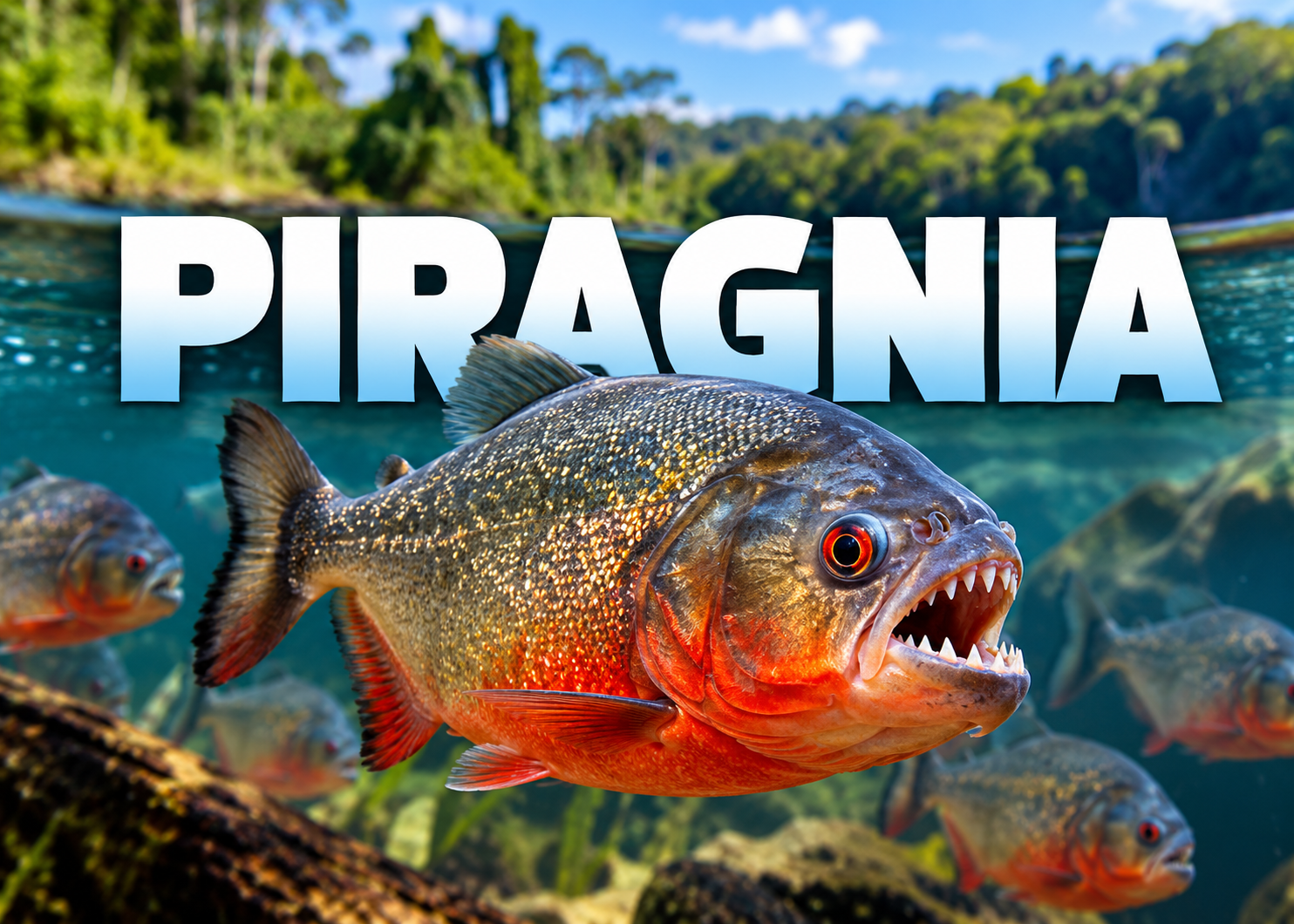
One familiar example is the red-bellied piranha, scientifically known as Pygocentrus nattereri.
This species has a greyish body, silvery markings, and reddish colouring along its underside. Its teeth fit together closely and are adapted for cutting food.
Red-bellied piranhas can grow slightly longer than 30 centimetres and may weigh approximately 1.8 kilograms. Actual appearance and size vary among piranha species.
Natural Habitat and Geographic Distribution
Piranhas are native to South America, where they occupy diverse freshwater environments.
They are associated with major river systems, including the Amazon and Orinoco basins, as well as other South American waterways.
These environments contain extensive networks of rivers, streams, lakes, and seasonally flooded forests.
Water levels frequently change between wet and dry seasons, influencing fish movement, breeding activity, and food availability.
Some piranhas inhabit relatively calm waters, while others occur in flowing river sections.
Healthy freshwater habitats are important because piranhas depend on aquatic food sources and interactions with other species for survival.
What Does Piragnia Eat?
The fish commonly associated with Piragnia has a more varied diet than its frightening reputation suggests.
Piranhas do not exclusively consume large animals or fresh meat. Their feeding habits depend on their species, age, habitat, and available resources.
Common foods include small fish, fish fins, insects, crustaceans, aquatic invertebrates, and animal remains.
Some species also consume seeds, fruit, and other plant material.
The red-bellied piranha, for example, is known to eat fish fins and smaller aquatic animals while also acting as a scavenger.
This dietary flexibility allows piranhas to survive in environments where food availability changes seasonally.
Are Piragnia Fish Dangerous to Humans?
Piranhas have developed a reputation as aggressive predators capable of attacking anything entering the water.
However, this portrayal is exaggerated.
Although piranhas possess powerful jaws and can inflict painful injuries, humans are not their usual prey.
Biting incidents can occur, particularly under certain environmental conditions, including low water levels and situations involving food competition or nest defence.
Films frequently portray enormous groups of piranhas rapidly consuming humans. Such scenarios do not accurately represent their typical natural behaviour.
Nevertheless, people should respect wildlife and avoid disturbing piranhas in their natural habitats.
Their capacity to bite means they should never be handled carelessly.
Behaviour and Social Structure
One interesting characteristic of certain piranha species is their tendency to gather in groups.
Red-bellied piranhas commonly form schools, sometimes containing 20 or more individuals.
Group behaviour may provide protection from predators and help individuals respond to changes in their surroundings.
Piranhas are not necessarily aggressive toward everything they encounter. Their reactions depend on environmental conditions and the presence of potential threats.
Their behaviour demonstrates that even animals with formidable physical adaptations can display cautious and defensive responses.
The Ecological Importance of Piranhas
Piranhas contribute to the functioning of South American freshwater ecosystems.
As predators, they influence interactions among fish and other aquatic organisms.
As scavengers, they consume animal remains, contributing to the breakdown and recycling of organic material.
Their presence is part of the complex freshwater food web, which includes insects, fish, birds, reptiles, and larger predators.
Changes to river habitats can affect these relationships.
Protecting freshwater ecosystems therefore benefits not only piranhas but also the many other species that depend on the same environment.
Common Myths About Piragnia
Several misconceptions continue to influence how people understand piranhas.
Myth 1: Piragnia is a newly discovered fish.
There is no reliable scientific evidence identifying Piragnia as a distinct, newly discovered species.
Myth 2: All piranhas are constantly aggressive.
Their behaviour varies according to species, environmental conditions, and circumstances.
Myth 3: Piranhas eat only meat.
Many consume a combination of animal and plant materials.
Myth 4: Piranhas always attack humans in groups.
Such behaviour is not typical, and their reputation has been exaggerated by fictional entertainment.
Understanding these differences helps readers distinguish biological evidence from dramatic storytelling.
Why Is Piragnia Discussed Online?
Piragnia provides an interesting example of how unfamiliar spellings can circulate through digital content.
A person searching for information about piranhas may accidentally type Piragnia and encounter multiple articles using the same variation.
This creates opportunities for confusion, particularly when websites fail to explain whether the term has scientific recognition.
The repetition of a keyword should not be mistaken for proof of a separate animal.
Readers should instead examine established biological classifications and reliable information about the species being discussed.
Frequently Asked Questions (FAQs)
What does Piragnia mean?
Piragnia is generally an informal or incorrect spelling of piranha, a freshwater fish native to South America.
Is Piragnia a real fish species?
No separate fish species is scientifically recognised under the name Piragnia.
Where do piranhas live?
Piranhas inhabit freshwater environments in South America, including the Amazon and other major river systems.
Are Piragnia fish dangerous?
Piranhas can bite and cause injuries, but their reputation for routinely attacking humans is exaggerated.
What do piranhas eat?
Their diet can include fish, insects, aquatic invertebrates, animal remains, fruits, and seeds.
Can piranhas live in aquariums?
Some species are maintained in specialised aquariums, but they require appropriate conditions, experienced care, and compliance with local regulations.
Conclusion
Piragnia is best understood as an informal spelling variation of piranha rather than a separate fish species.
The real animals behind the term are fascinating freshwater fish with powerful jaws, varied feeding habits, and important ecological roles.
Although popular culture often presents piranhas as exceptionally dangerous predators, scientific observations reveal more diverse and complex behaviour.
By understanding their natural habitats, physical characteristics, and interactions with other aquatic species, readers can develop a more accurate appreciation of these remarkable South American fish.
The story of Piragnia also demonstrates why checking scientific terminology matters when unfamiliar words become widely repeated online.